Zero Trust Solutions for Printing

SOS Systems provides Zero Trust solutions that secure printers, users, and documents across a range of environments, from hybrid working situations to the cloud. If you’re an IT manager, business owner, or cloud architect, we have the Zero Trust security solution for you.
As organisations continue moving to the cloud, hybrid working, and identity-based security, it’s crucial that every endpoint is treated as untrustworthy by default – including printers, scanners, and devices that transmit sensitive documents. Without Zero Trust architecture in place, organisations often struggle to prove who accessed documents, control remote printing risks, or integrate printers into their wider cybersecurity stack.
Cyberattacks occur every 39 seconds, with over 2,200 incidents daily, so it’s more important than ever to move away from the traditional ‘trusted network’ model and towards a Zero Trust network printing solution.
What is Zero Trust Security Architecture?
Zero trust is a security approach to IT that is based on never automatically trusting any user, device, or application. This applies even when they are inside your organisation’s network. Instead, zero trust architecture continuously checks every access request before allowing users to access systems.
A zero trust strategy usually includes:
- Verifying the identity of every user before granting access
- Checking devices meet your organisation’s security requirements
- Continuous verification and monitoring to detect unusual activity
- Only allowing access to the systems and data needed for the specific task at hand
Zero trust solutions heavily reduce the risk of breaches and improve the safety of your and your customers’ details. Zero trust printing also extends the same security principles, ensuring confidential documents are only released to authorised users.
Why Printers Require Zero Trust Security
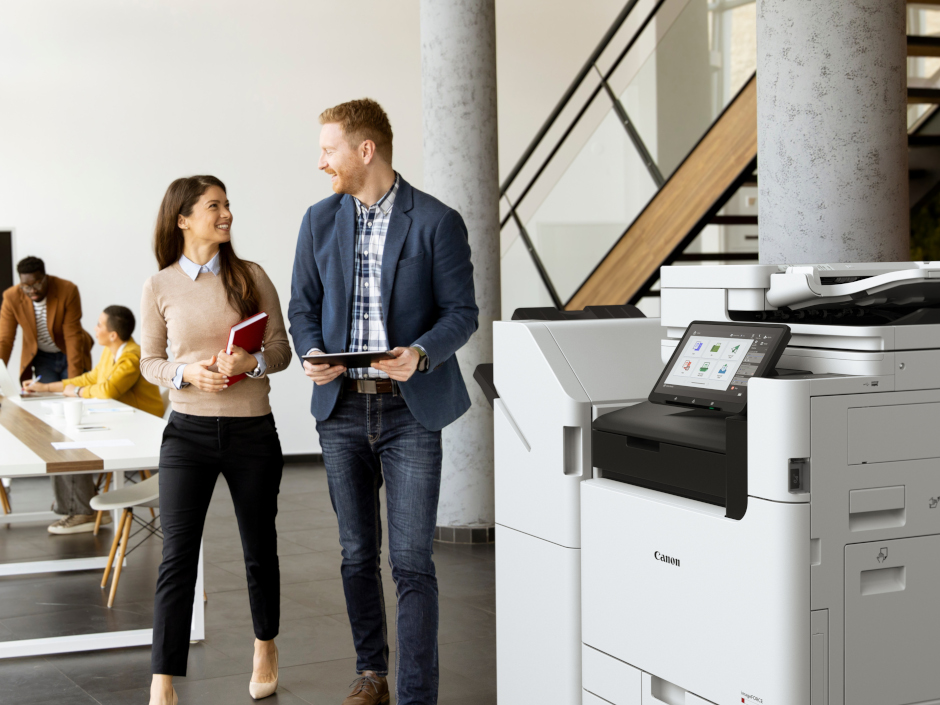
Equipment like printers, scanners, and multi-functional devices (MFDs) is generally seen as standard office equipment, but in reality, they are a cybersecurity risk. That’s because these devices:
• Transmit data across networks and cloud services
• Authenticate users
• Integrate with business workflows
Most business owners don’t realise this, and can have printers sat on the same network as users and servers, lack any monitoring, and are excluded from Zero Trust strategies. This creates a dangerous blind spotwhere just one single compromised printer can provide attackers with a pathway to the entire network.
The Key Benefits of Zero Trust Architecture
Being a Zero Trust company with a modern print platform offers many security benefits throughout your organisation.
• Isolate Printers to Prevent Lateral Movement
With Zero Trust architecture in place, printers and endpoints areisolated from the main network, which prevents attackers from using them to get to other systems. Therefore, if any device becomes compromised, the impact is contained to that one device.
• Cloud-Based Management Without Opening the Network
Enabling cloud-based management and printing avoids having to open up the network to configure devices. That means that IT teams can configure, monitor, and secure devices remotely without inbound firewall rules or risky network access.
• Align with Microsoft’s Zero Trust & Cloud Safety
Aligning with Microsoft's push towards cloud-based services and "Zero Trust" architecture ensures your modern print platforms are not only secure today, but for the future too.



SOS Systems’ Zero Trust Network Printing Solutions
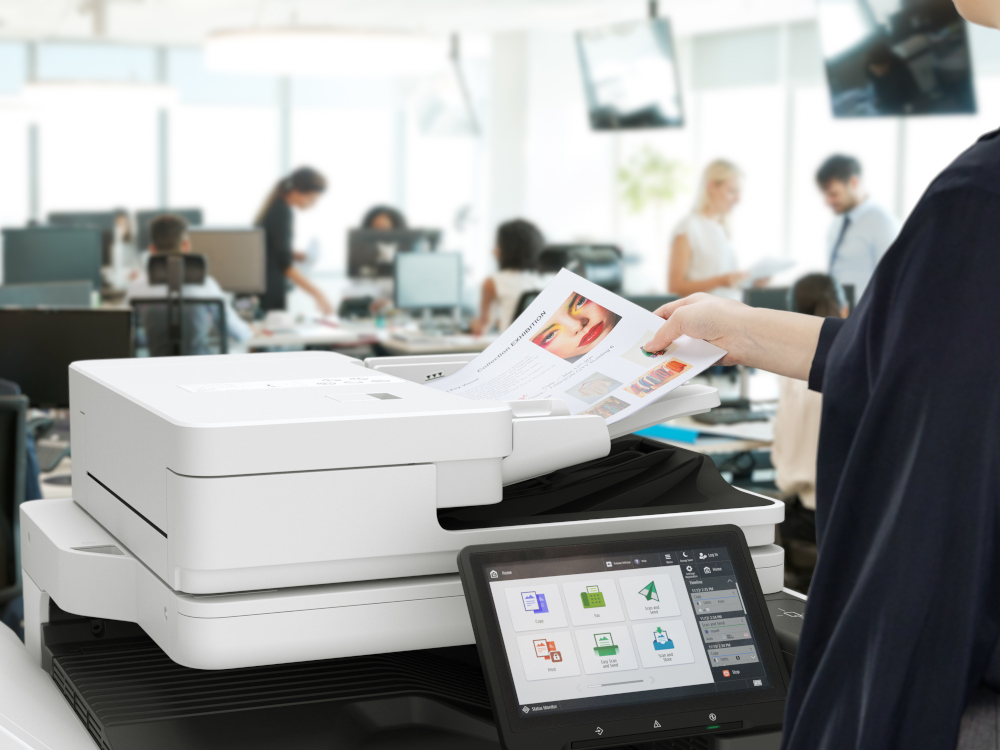
With UniFlow Online, we help companies move towards a Zero Trust architecture for their printing infrastructure. UniFlow Online isolates printers from the main network so they can connect to the cloud instead. It also provides remote management capabilities, which are important for a Zero Trust infrastructure.
Zero Trust Printing Approach
At SOS, we ensure comprehensive Zero Trust printer solutions based on your current setup and security posture. Here’s what to expect:
1. We begin by understanding your current network setup and security structure, including printers, which can be commonly overlooked by IT teams.
2. We educate members of your business on the benefits of isolating printers and other endpoints in a Zero Trust architecture as opposed to being on the same network.
3. We will recommend using our uniFLOW Online cloud printing solution as a way to achieve this printer isolation and management in a Zero Trust model.
4. We work closely with you to gradually transition your entire printing infrastructure to the uniFLOW Online platform, which operates independently of the main network.
5. We will continuously work to improve your Zero Trust architecture to work towards a full Zero Trust environment.


Benefits of UniFlow Online for Zero Trust Printing
As part of our Zero Trust network services, we use uniFLOW Online to help ensure a secure printing environment. Here are some of the main features and benefits of this print management solution:
- uniFLOW Online allows printers to connect only to the cloud, not the internal network, aligning with Zero Trust principles.
- It provides remote management capabilities for the isolated printers, which is critical when they are no longer on the main network.
- uniFLOW online integrates with modern print platforms from Microsoft that are also moving towards cloud-based, driverless printing.
Overall, uniFLOW is a way for customers to future-proof their printing infrastructure as they evolve their Zero Trust strategy overtime.
Want to find out more about how SOS can help transform your businesses printing environment with Zero Trust architecture?

Talk to a Zero Trust Print Solution Expert
Whether you’re just starting your Zero Trust journey or you’re looking to strengthen your existing strategy, we can help. Our print and document management experts can help you identify risks in your business, design theright architecture, and secure your print and document environment to allow forfuture growth.
Speak to us today to take the first step towards a fully Zero Trust security network.
Get in touch to learn more about Zero Trust Printing Solutions with SOS.
Read our latest Case studies


Frequently Asked Questions
It enables secure remote printing and cloud-based management without exposing internal networks or relying on VPNs.
Yes. Printers store data, transmit documents, and connect to networks. Without proper security, they have a significantly higher risk of being attacked.
Yes. Cloud-native Zero Trust printing supports ARM64 processors used in modern laptops and tablets.
Yes. Zero Trust printing supports integration with modern identity systems and authentication methods.